Upland Soil Erosion
While the majority of the water that flows in the rivers comes from snowmelt in the San Juan Mountains, pinyon juniper upland forests, and canyonlands are major watersheds for the stormwater that flows into the rivers. Sandy arroyos are fluid ephemeral channels that change after every storm and naturally weave throughout rangelands, oil and gas roads, trails, and sandstone-based biomes, often causing soil erosion.
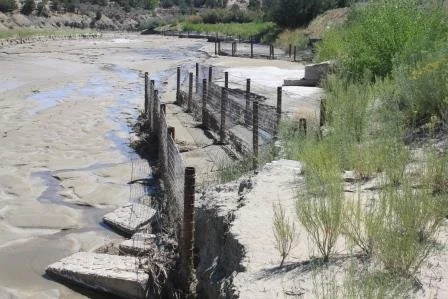
Years of unbridled stormwater have increased erosion, put excess sediment into previously healthy surface waters, and threatened upland pastures. The San Juan Watershed Group and its partners installed sediment fences to slow stormwater flow, improve sediment retention, support riparian habitat, and protect natural infrastructure. Over the past 20 years, the area has stabilized with a native cottonwood microbiome that absorbs the force of flow during stormwater events, particularly those associated with monsoonal flow.
Sustaining these gains requires ongoing collaboration with entities like the U.S. Bureau of Land Management, the State Land Office, the San Juan Basin Roads Committee, and local ranchers. We must maintain river health by removing invasive species, managing upland infrastructure, and supporting grasslands that retain sediment and improve soil health and biodiversity. These collaborative efforts reflect a long-term commitment to a healthy, functioning watershed that benefits both the land and the communities that depend on it.